5x-10x Faster Object-Centric Event Data Systems Just by Waiting – Event Knowledge Graphs are Catching Up

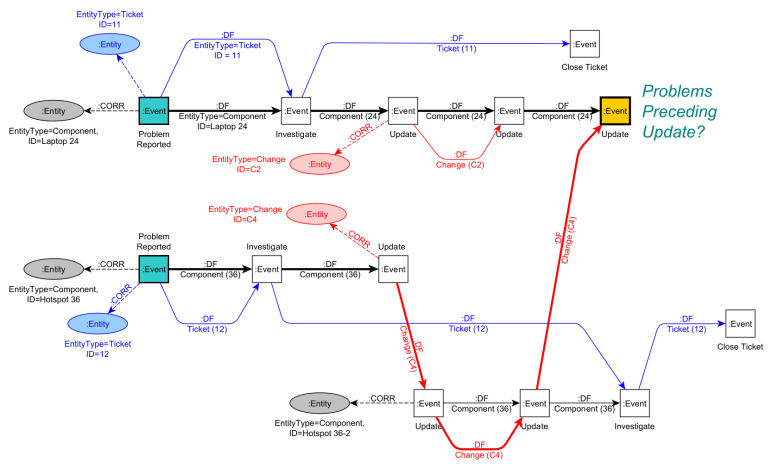
The shift to object-centric process mining is enabled by a change in the underlying data model: from cases (which flattens source data to group events by a single primary identifier) to object-centric event data (which models relations between objects and events using many-to-many relations). This shift also comes with a storage and performance overhead - … Continue reading 5x-10x Faster Object-Centric Event Data Systems Just by Waiting – Event Knowledge Graphs are Catching Up
Why is transitioning to Object-Centric Process Mining non-trivial?

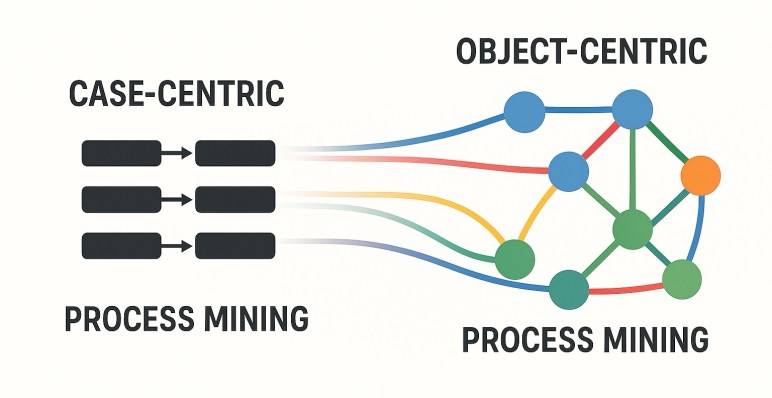
Over the last months I had various exchanges with practitioners and vendors in process mining on the topic of Object-Centric Process Mining (OCPM). And while the idea has been around for a while, industrial adoption remains a challenge even for seasoned experts. But why is that? From these conversations I gathered that adopting OCPM faces … Continue reading Why is transitioning to Object-Centric Process Mining non-trivial?

Object-Centric Processes – from cases to objects and relations… and beyond

Object-Centric Processes are a new way to look at processes: instead understanding a process execution as a sequence of isolated steps in a monolithic case, an object-centric process describes how its activities work on the various involved and related objects over time. This idea of describing processes as emerging from an interplay of changes to … Continue reading Object-Centric Processes – from cases to objects and relations… and beyond

How do Event Graphs help analyzing Event Data over Multiple Entities?

Classical event logs have the fundamental shortcoming of describing process behavior only in isolated process executions from the viewpoint of a single case entity. Most real-life processes involve multiple entities and process executions are not isolated but tightly connected - through actors and entities involved in multiple executions. This post summarizes how event graphs are … Continue reading How do Event Graphs help analyzing Event Data over Multiple Entities?

Artifact-Centric Process Mining for ERP-Systems with Multiple Case Identifiers

By Dirk Fahland. Analyzing processes supported by an ERP system such as Order-to-Cash or Purchase-to-Pay are one of the most frequent use cases of process mining. At the same time, they are one of the most challenging, because the processes operate on multiple related data objects such as orders, invoices, and deliveries in n:m relations. … Continue reading Artifact-Centric Process Mining for ERP-Systems with Multiple Case Identifiers

Multi-Dimensional Process Thinking

Dirk Fahland I am trying to sketch the landscape of describing, analyzing, and managing processes outside the well-established paradigm of a "BPMN process" where a process is executed in instances, and each instance is completely isolated from all other instances. Thinking about Processes Let me introduce the term "process thinking". Process-thinking is the fundamental paradigm … Continue reading Multi-Dimensional Process Thinking